










One topic at a time
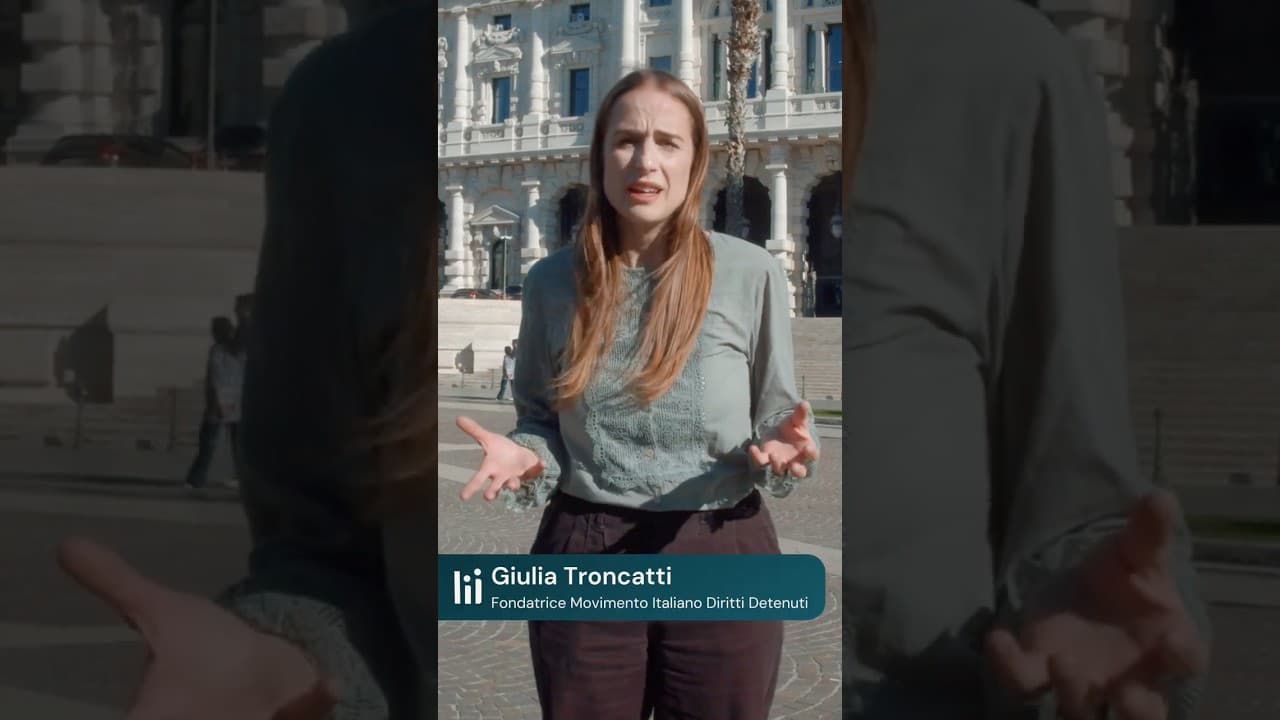
Giulia Troncatti
In one minute, Giulia Troncatti explains how prison works and where reality drifts away from the law.
Who is Giulia TroncattiAlternative measures
The measure to transfer prisoners without a domicile to communities has involved only 200 people out of the 5,000 envisaged, with strong regional disparities.
Today we return to talk to you about a reform we have already discussed. If you missed the content on this profile, go and catch up on it.
If you remember, at the end of May the Minister of Justice Nordio had announced a measure by which 5,000 people, who theoretically would be entitled to house arrest, but who in practice did not have a home where they could serve it, would have been able to access communities.
These were people who were making good progress in their educational path and with a sentence of less than 4 years. From the outset, the measure had raised questions among community workers, who showed themselves to be sceptical about the actual possibility for the communities to accommodate all these people. Yet it had been announced as a measure to be implemented by the summer.
Within a week, the number had already been scaled down and there was talk of 3,000 people by September. We have reached September and it is now time to take stock. But have these people really managed to get out of prison?
Just a few days ago, and this is the reason that prompts us to talk to you about it today, the list of communities that would be ready to accommodate these people was published. There are 14 communities and it is estimated that these communities risk accommodating a number around 200 people.
Another significant fact is that these communities are not evenly distributed across the territory. In fact, Lombardy and Lazio have only one community each, while other regions have a different availability.
Both the estimate of the number of people who will actually be able to be accommodated, and this uneven territorial distribution, make us return today to this measure and make us take stock of whether it has actually worked or not.
To date, the balance seems negative to us. What do you think? Write only in the
One topic at a time
Giulia Troncatti