




One topic at a time
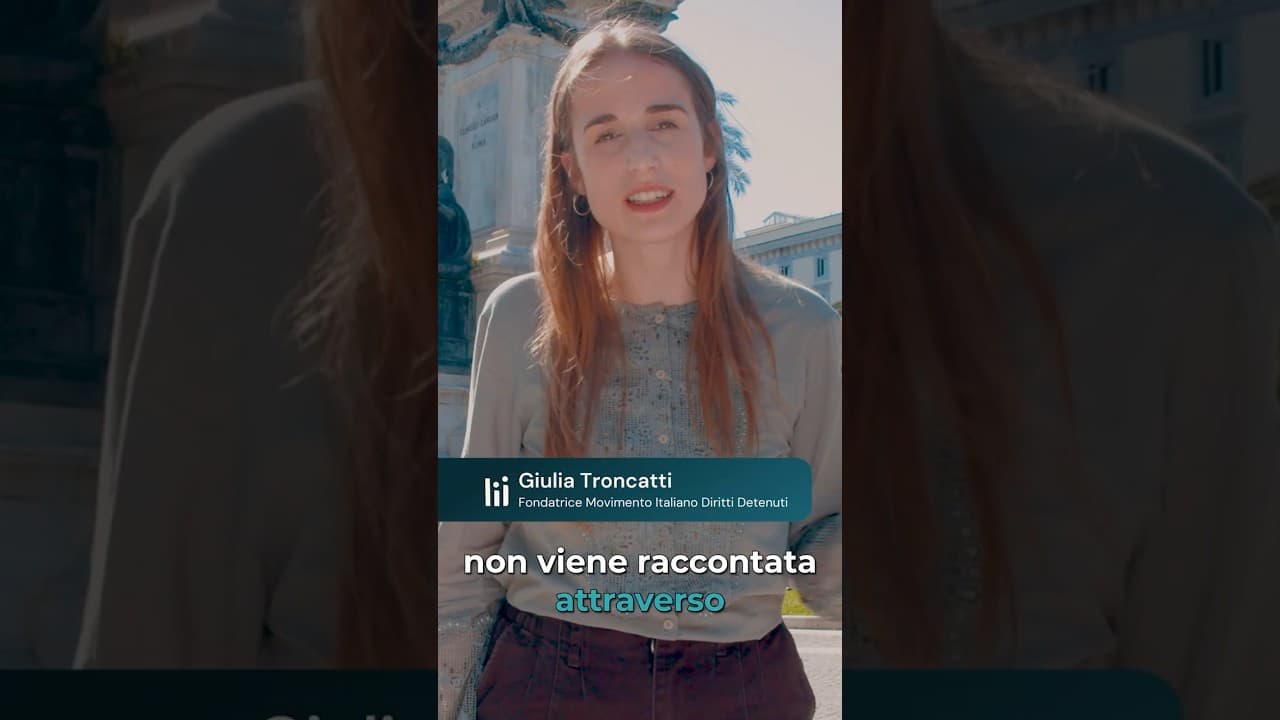
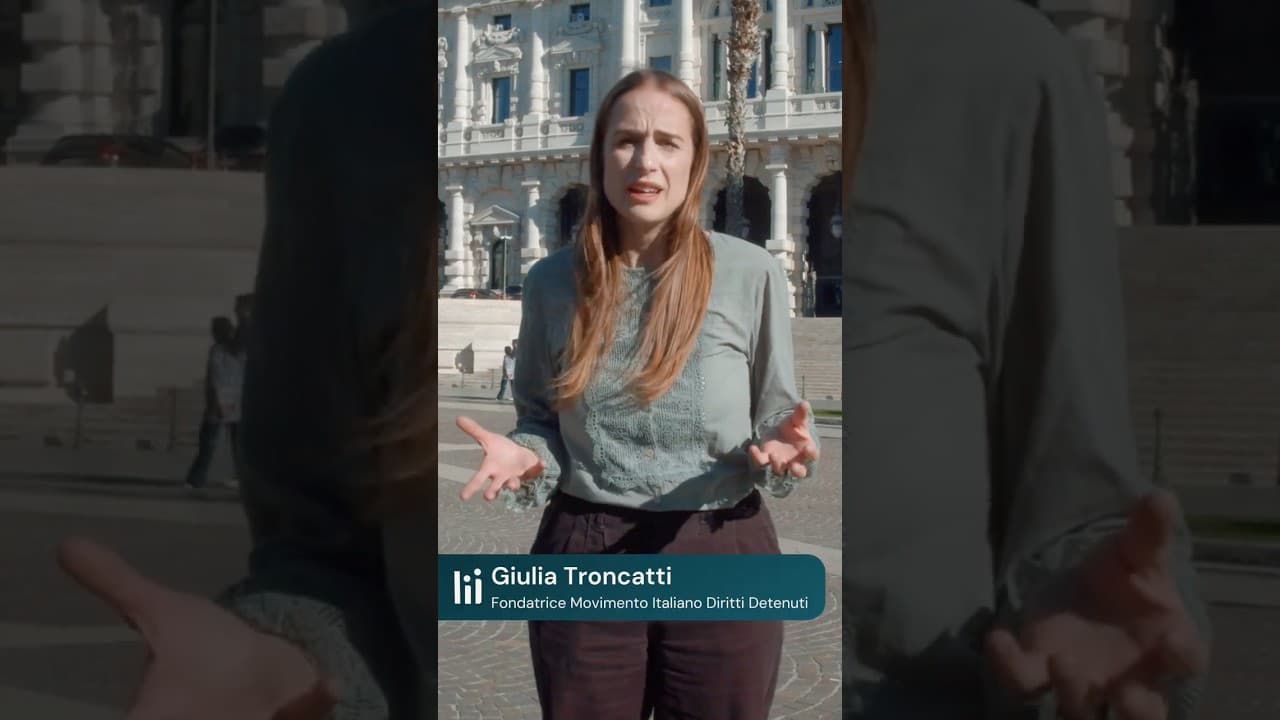
Giulia Troncatti
In one minute, Giulia Troncatti explains how prison works and where reality drifts away from the law.
Who is Giulia TroncattiReintegrating into society
The video reflects on the evolution of the words used to describe punishment, from correcting the individual to the reconstruction of social bonds.
The words we use to talk about prison are never neutral; they reveal what idea of punishment we have in mind.
We at Movimento Italiano Diritti detenuti care a lot about the correct and conscious use of words, to the extent that one of our columns is precisely dedicated to the words of prison.
Today we want to start from words and reflect with you. In 1948 the Constitution writes that punishments must aim at the re-education of the convicted person. It is a strong word chosen in the aftermath of fascism to say that prison cannot be only punishment, but carries with it a question: re-educate to what and who decides what is right to teach an adult person?
Over the years those who work within the prison system have sought other words to describe the purpose of punishment. Each of these shifts the perspective a little. Re-education looks at the person, there is something to correct inside them. Re-socialisation looks at the relationship with others. Whoever has committed a crime must return to live among people, respecting their rules. Reintegration says that that person was already part of society and that the broken bond must be rebuilt. Re-insertion speaks of very concrete things, a house, a job, a network of relationships to return to and then there is the most recent word, reparation. Here, those who have suffered the crime and the whole community also come into play. Restorative justice, which today in Italy has its own discipline, tries to put the perpetrator, the victim and the territory back into dialogue. Not only paying a debt, but trying to mend a tear.
If you look at them all together, these words tell a coherent path. It starts from a person to be corrected and arrives at a relationship to be rebuilt. The perspective widens from the single detained person to the society waiting for them outside, up to those who have been hurt by the crime.
In your opinion, among these words is there one more appropriate than the others? Let us know in the comments.
One topic at a time
Giulia Troncatti