The Founder's Letter
Humanitas: recognizing ourselves as human
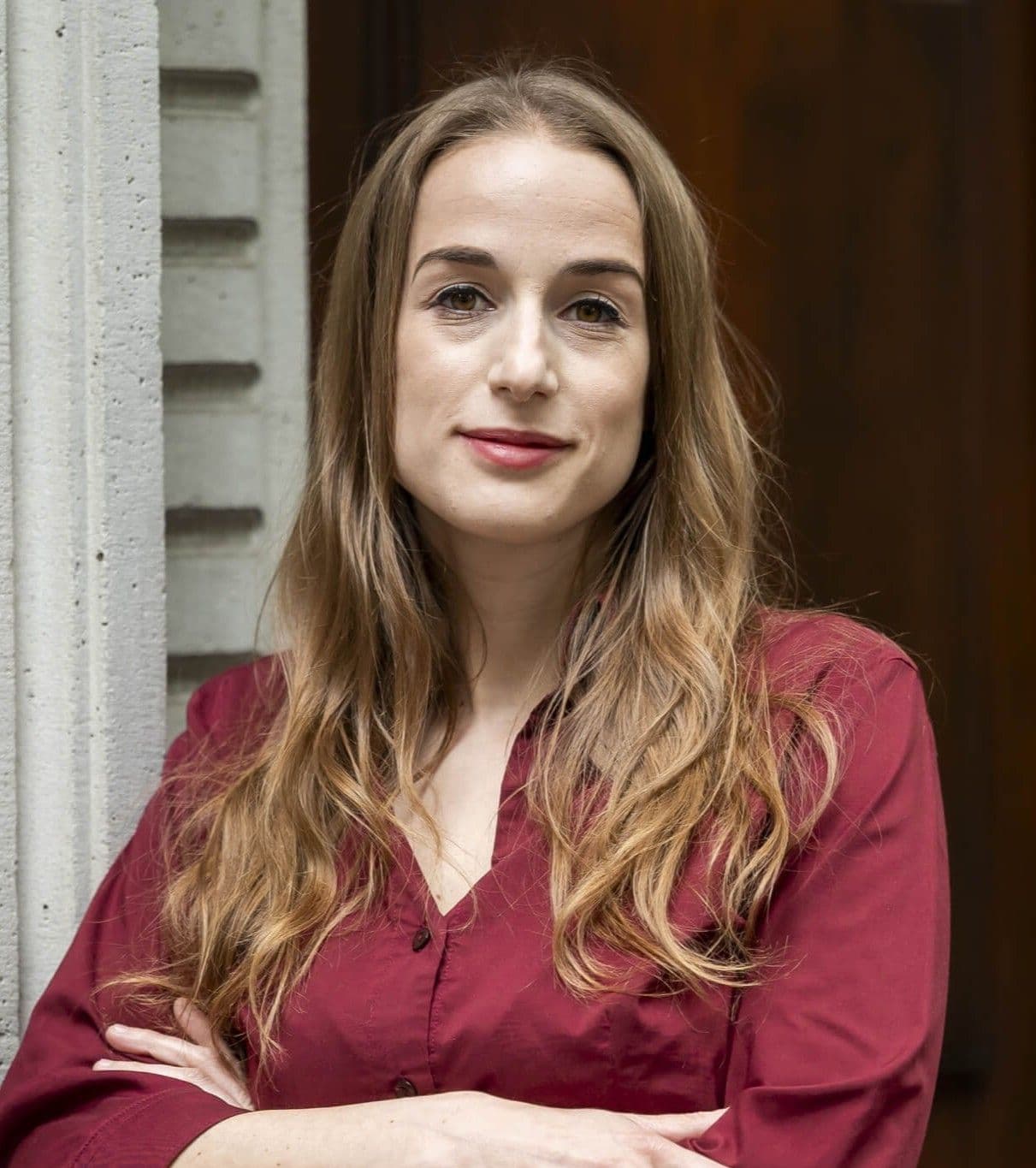
Giulia Troncatti
Humanitas in Latin does not simply mean ‘humanity’ in the sense of ‘the totality of people on the planet’; it expresses the feeling that leads us to recognise one another as human beings and calls us to be human with one another.
Banal? Obvious? Simple? Not when ‘the other’ is in prison.
It may come as a surprise that I choose to begin this account of the project with the concept of humanitas rather than with my first visit to a penal institution, but had I not in some way felt this sentiment even before physically entering a prison, I would probably never have taken an interest in the subject. My true starting point was, in fact, an absolutely ordinary experience: in the transition from childhood to adolescence I began to develop a certain dissatisfaction with labels, and to sense that slogans such as ‘good’ and ‘bad’, however reassuring, failed to capture the complexity of the people around me — a complexity I could also feel within myself. Entering prison only made me more aware of how true and powerful that intuition had been.
I entered a penal institution for the first time in 2021, in the first year of my master’s degree, when I began working as a university tutor for the Prison Project of the University of Milan. My role would be to support students enrolled in the Humanities faculty in preparing for their university exams, by obtaining the necessary books and liaising with the relevant professors. When I heard about the project, I joined immediately, driven by the desire to put my skills at the service of a worthy cause and, I confess, by that indiscreet curiosity that animates all lovers of the true-crime genre. I would never have expected that this experience — begun almost as a game — would so decisively redirect the course of my life.
Entering prison meant realizing that the ‘monsters’ presented to us by the sensationalist narratives of the news are nothing other than people.
Not second-rate people, not people lacking something — just people, people who made mistakes, who committed even atrocious acts, but people. Now, as I write, it seems like a trivial realization; yet at the time it was not, and for many it still is not today.
I think of Carlo, who killed, but who is also a university student who spends hours in his cell reading the classics, and through study has found a way to reconsider his crime, to look it in the face. I say this because Carlo exists, but his story will never end up on television — yet it is as real as any other, and it tells us something that sensationalist narratives do not: that people are complex, even on the inside.
Stories like Carlo’s are more common than one might think. And often, when you look at them closely, they tell another story too: prison is frequently the endpoint of lives that never had support networks — no stable family, no school, no work, no access to mental health care. A form of lowest-tier welfare, that intervenes only when it is already too late. Bearing this in mind does not mean justifying; it means understanding. And understanding is the only way to do things differently.
Recognizing a common humanity with those who have committed crimes, especially particularly violent ones, is so difficult because it forces us to question ourselves — who we are and who we might have been had we followed different life paths. But above all it obliges us to take responsibility for the way these people — not animals, not monsters, not labels — are made to serve their sentences in the institutions of our country. It obliges us, as citizens, to ask what kind of justice and what kind of society we want, and what happens beyond the perimeter walls in the outskirts of our cities.
I have done this — nothing more, nothing less than my civic duty: I informed myself.
From that day to this, I have continued to enter prisons, but above all I have deepened my understanding of what happens inside Italian penal institutions. There are thorough and detailed reports, sector experts, and formerly incarcerated people who offer their testimony and denounce the atrocities that occur everyday thanks to the complicit indifference of civil society. Violations of the fundamental human rights enshrined in the Universal Declaration of Human Rights are everyday occurrences: health, work, access to education, space, and real opportunities are all lacking. Italy has already been convicted of violating Article 3 of the European Convention, which prohibits torture and inhuman or degrading treatment, on dozens and dozens of occasions: between 1959 and 2023 alone, specific convictions for inhuman treatment numbered more than sixty. The realities are certainly not all the same, but the general trend is deeply worrying, especially when one considers the number of suicides we record every year. These are all people whose deaths, as a civil society, we carry on our consciences. We must remember that.
Some of you may think that these people made choices, that society has the right to protect itself, that those who do wrong must pay, that a certain degree of harshness is necessary for justice to be truly justice and not mere clemency. But where is the line? Who decides? The law decides — in particular the Constitution, which is very clear on this point: Article 27 states: “Punishments may not consist of treatments contrary to the sense of humanity and must aim at the re-education of the convicted.” The founding fathers wrote this in the immediate post-war period — men and women who had experienced detention firsthand and knew all too well what happens when the State loses sight of human dignity.
As for security, far from what a certain political rhetoric claims, the continuous toughening of sentences does not foster security; it only makes us less human.
Today the data on recidivism tell us that seven out of ten people who leave prison in Italy reoffend. Our system not only does not work, but actively produces more crime, because prisons become veritable ‘schools of crime’ in which to build careers and connections. Bear in mind that we spend public money — roughly three billion euros a year — to return to society people who are more dangerous than when they entered, and every instance of recidivism produces a new real victim.
Victims and their suffering, in this regard, cannot become the excuse behind which a State shields itself in order to be itself a perpetrator. Victims must not be instrumentalized but respected and protected, through policies that guarantee security (real security!) and support in overcoming the wound caused by the crime.
But what does it mean, concretely, to ‘overcome the wound’? It means asking ourselves whether truly responding to pain with more pain — to violence with the violence of punishment — can heal anything, or whether it only multiplies the wounds. The Movement believes there is an alternative: it is called restorative justice. It is not clemency, it is not forgetting, it is not pretending the crime did not happen. It is something more demanding: it means placing reparation of the harm at the centre — towards the victim, towards the community, towards oneself — rather than punishment alone. In many countries this path is already being taken, with measurable results: less recidivism, greater awareness in those responsible, greater real relief for those who have suffered.
We know this is a distant horizon. We are not asking for prison doors to be thrown open tomorrow morning.
We are asking to begin imagining a different society: one in which the criminal justice system is not an instrument of collective revenge, but an instrument of care.
And this, taken to its logical conclusion, also means questioning prison itself as an institution: if our goal is to stop responding to pain with pain, then we must have the courage to ask ourselves whether confining people — stripping them of years of life in often degrading conditions — is truly the best response, or whether it is simply the most convenient one, the one that allows us not to look. The Movement believes that building a more just society means, in the long term, working towards overcoming prison as the only response to crime: not out of naivety, but because the data, history, and our own Constitution tell us we can do better.
But what can I, as an individual citizen, do? Over these years I have asked myself this question many times, enduring the frustration of David against Goliath, through small daily actions — volunteering in prison, sharing my experience with people unfamiliar with this reality, continuously updating my knowledge. While I was teaching in schools, I tried, as far as possible, to give my students the tools to become aware, critical, curious, and informed citizens. I tried to work on prevention, reminding them that they must never think of themselves as labels, and underlining the importance of study and of affection for a healthy and full life. Teaching is a wonderful profession that brought me enormous satisfaction and made me feel useful to the construction of the society I want to belong to. For a while I found peace in this thought: that my contribution would be to sow good practices and wait for them to germinate further down the line.
Deep down, though, I felt there was something unresolved — that I did not want to wait twenty years to improve things, but to act today, to contribute to changing things today.
From this unresolved inner turmoil, and from the encounter with a group of people animated by the same flame, the Italian Movement for Prisoners' Rights (Movimento Italiano Diritti Detenuti) is born today — an association of free people and formerly incarcerated people, committed to working side by side to bring a different and more realistic narrative about what Italian prisons are today, and to contribute through active practices to the protection of the rights of those deprived of their freedom.
The birth of the Movement would furthermore not have been possible without the contribution of the Laura and Alberto Genovese Foundation, with which I wove a precious and unexpected dialogue. I had turned to the Foundation to address a problem of addiction affecting someone close to me. From that first contact a broader conversation was born: together we explored the very tight knot between addiction and detention — a scourge that disproportionately affects those already in a position of vulnerability, and which the Italian penitentiary system struggles to address with adequate tools. That dialogue transformed into a real collaboration, and from that collaboration the Movement was born. It is proof that speaking openly about difficult things — addiction, prison, the failure of the system — can open unexpected doors and generate something new.
Join us. Read, share, participate. Break the silence. Because to choose silence is to choose that things remain as they are. Human rights are not something to be deserved. They are something you have. Always.

Video interview with the Founder