




One topic at a time
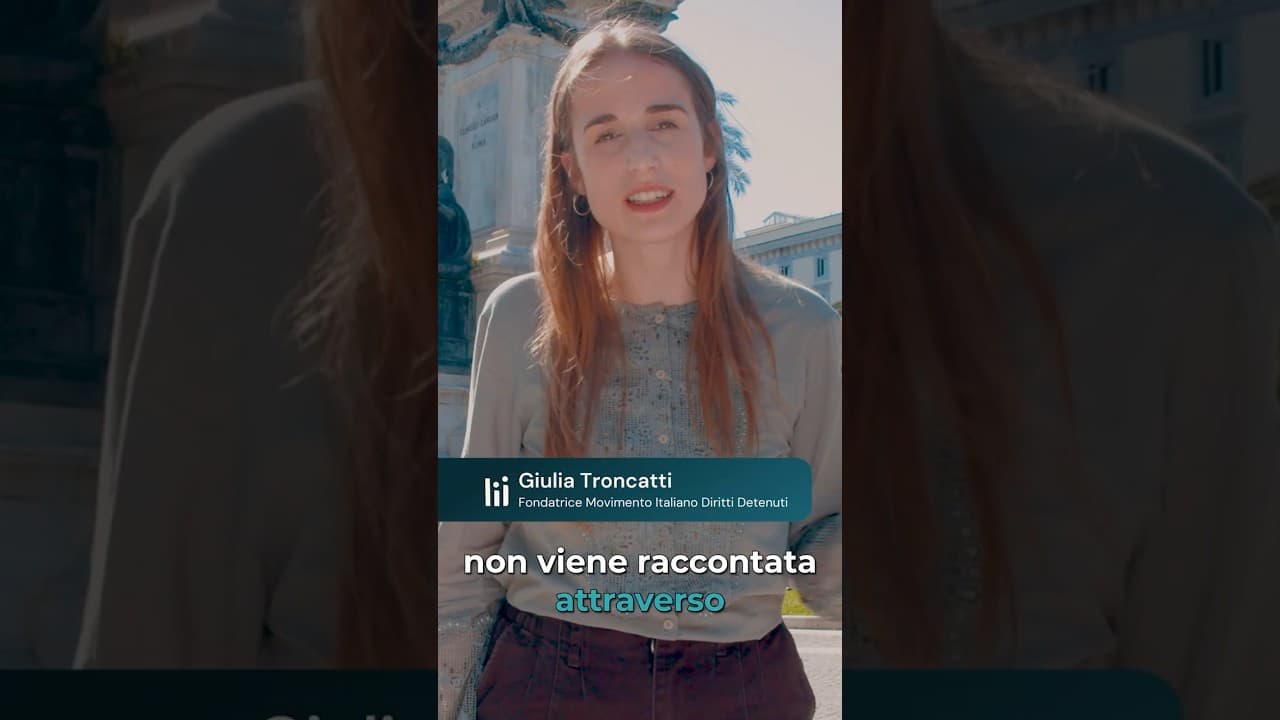
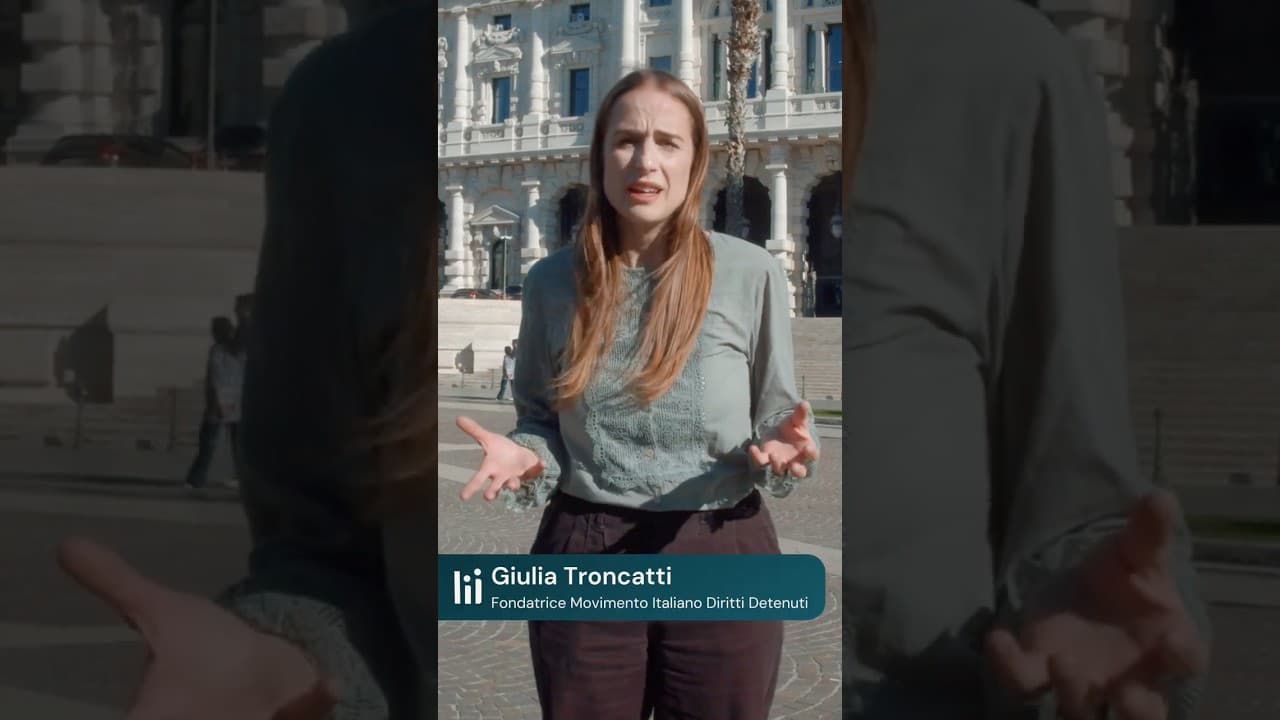
Giulia Troncatti
In one minute, Giulia Troncatti explains how prison works and where reality drifts away from the law.
Who is Giulia TroncattiCompensation for overcrowding
The video analyses the daily difficulties of the legal-pedagogical officers in prison, among overcrowding, bureaucracy and relational management.
In one of the previous Lil issues we presented the figure of the legal-pedagogical officer, a brief history of how this figure was created and above all what their duties are.
Today, however, we want to present to you the problems linked to the exercise of the duties of this figure. One of the first problems that we also observe directly when we enter prison with Nessuno Tocchi Caino for visits is that unfortunately the high number of detained persons, caused above all by overcrowding, makes it difficult for this figure to be able to exercise their duties in an adequate or at least satisfactory manner.
You will understand that managing 50 people is not the same as managing 100. A person has 8 hours of work available: let us suppose these 8 hours must be redistributed over a user base that, however, has doubled and this obviously makes the work less effective.
A second important aspect to bear in mind with respect to the exercise of the duties of this figure is that they network with many actors inside the Penal Institution, but also outside, and therefore must manage a very significant relational complexity. As often happens with all caring professions, it also happens for example for teachers or also for other professional figures who work in the social field, it also depends on the personal attitude of the person and on how much this person wants and feels as a deep personal desire to get involved in order to be able to carry out their work in the correct way.
A third important element that now can become frustrating even for those who work with enthusiasm and professionalism is that of the management of time and bureaucracy which are very long and sometimes very complex because they also intercept the times of justice.
But let us give a concrete example. If a legal-pedagogical officer gets in touch with a community to accommodate a detained person and this community says it has a place, but then the response from the Supervisory Court regarding the possibility of sending the detained person to the community is delayed, it can happen, for example, that the place in the community is lost.
And this does not only mean double the work, but also means having to manage the frustration of the detained person who finds themselves unable to access the community, but at the same time does not know who to blame.
And therefore legal-pedagogical officers are also assigned an important relational task of managing the frustration of the detained person.
Finally, there is a last aspect to consider which is also more of a conceptual aspect if we want. Legal-pedagogical officers are also assigned the task of guaranteeing the protection of the rights of persons deprived of liberty. It becomes difficult to work well with professionalism when one finds oneself caught between established practice and a desire to carry out one's role instead in the correct manner.
Had you ever heard of this figure? Let us know in the
One topic at a time
Giulia Troncatti