

One topic at a time
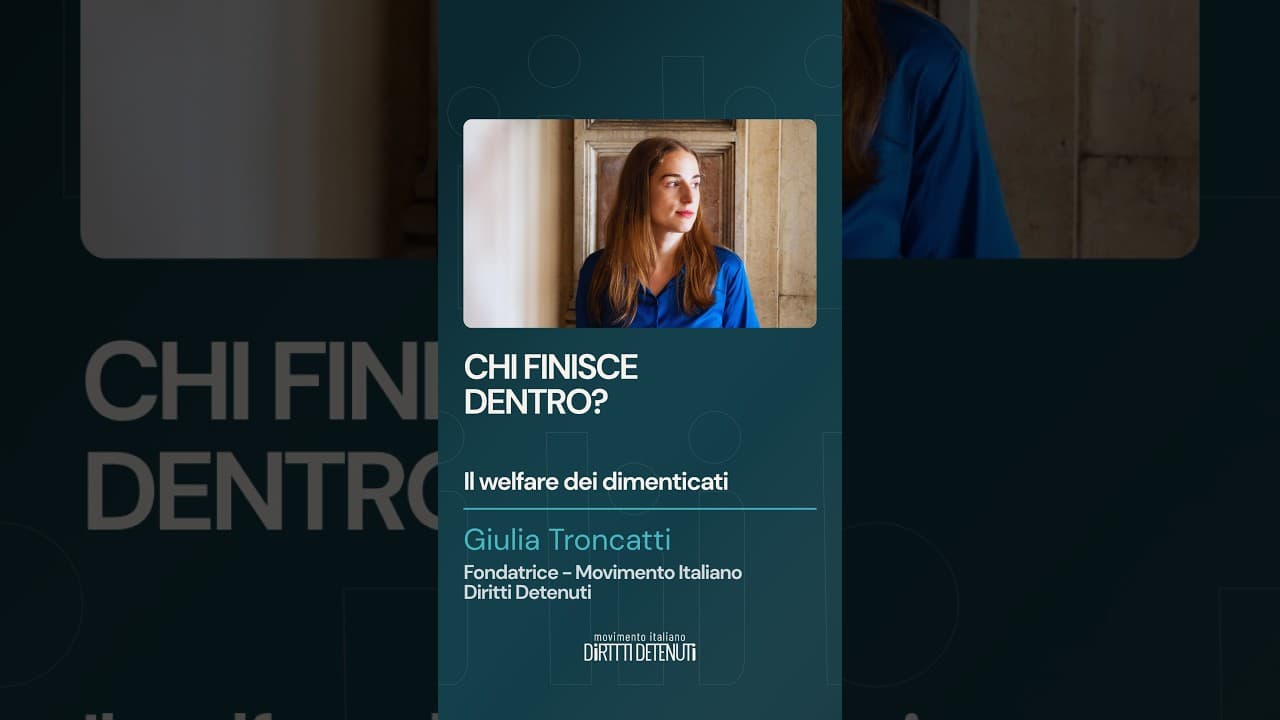
Giulia Troncatti
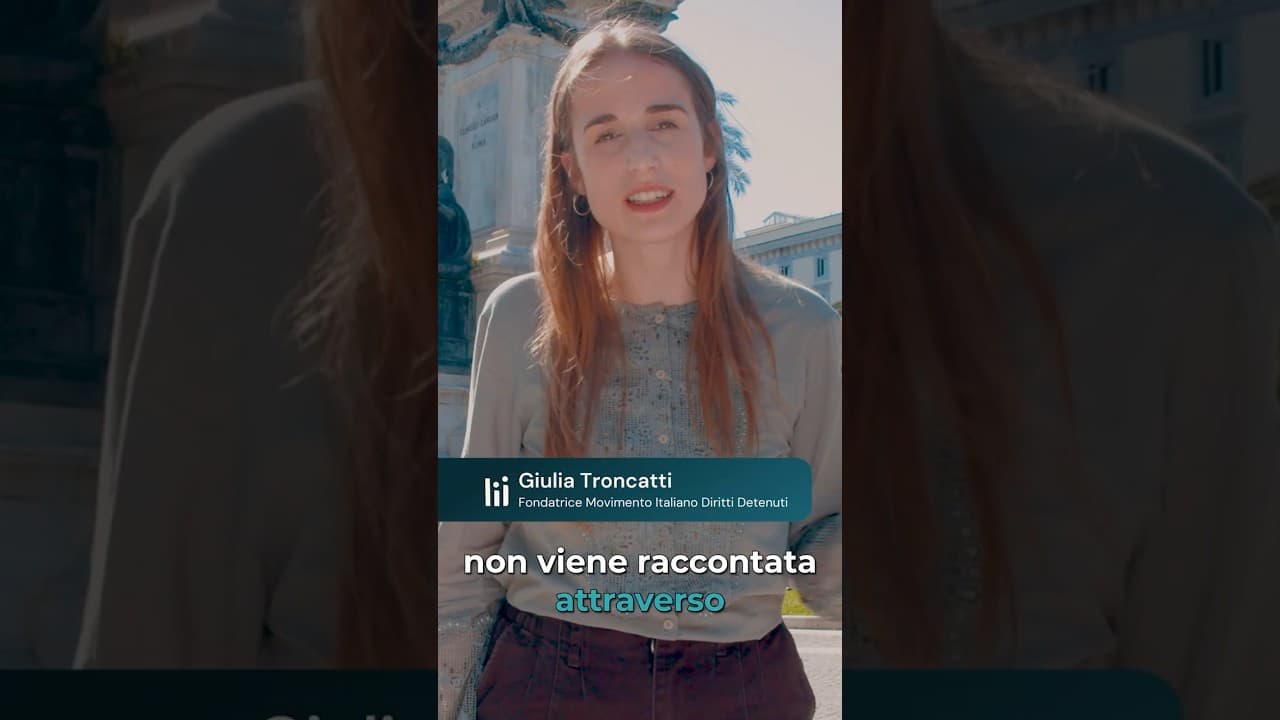
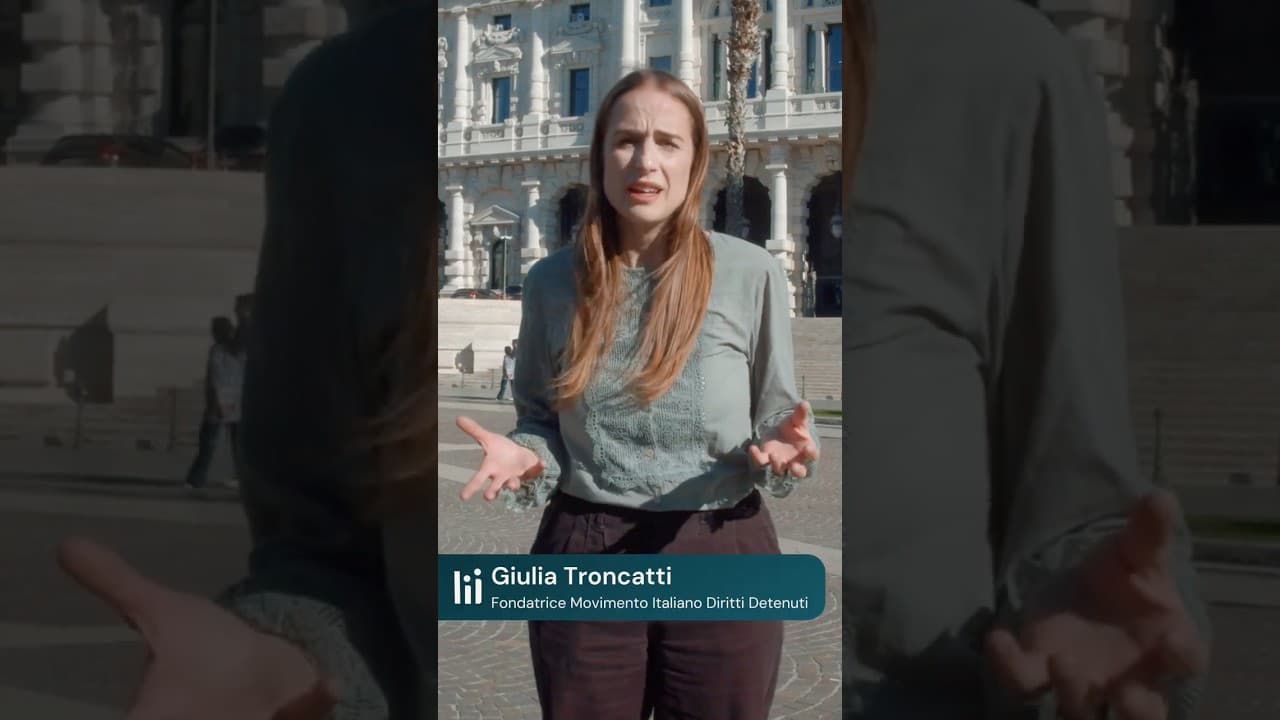
In one minute, Giulia Troncatti explains how prison works and where reality drifts away from the law.
Who is Giulia TroncattiCompensation for overcrowding
Prison is an example of a total institution, where the loss of autonomy limits personal responsibility and hinders re-education.
Have you ever heard of total institutions? In 1961 the sociologist Ervin Goffman studied asylums, barracks and prisons and called them Total Institutions, places where people live, sleep, eat and work in the same space under a single authority, separated from the rest of the world.
Goffman observes that those who enter these places go through a change, leaving behind their own objects, their own rhythms, many of the small decisions that outside they used to make on their own. Little by little their identity adapts to the institution.
In prison this transition has a concrete symbol, the so-called domandina, that is, a form which the detained person fills in and gives to the administration to ask for something. A phone call, a visit, a medical appointment, a purchase, a meeting with the educator.
It works like this: you fill in the form, hand it in, wait for the answer. It has its own logic. In a place where hundreds of people live together, obviously rules, traceability, order, an effective and efficient organisation are needed.
But this mechanism also has important consequences. The first is the time that necessarily gets longer to process the request. The second is that an adult finds themselves in the position of having to ask for permission in writing for almost everything.
And it is here that an important question arises. The Constitution tells us that punishments must aim at re-education, that is, preparing the person to return to society. But outside, life is made up of continuous choices, not of asking for permission, managing time, money, commitments, relationships. How do you learn to do this if for years someone else decides for you?
The counterproposal that many workers give is one word: responsibility. And it is something that we too as Movimento Italiano Diritti detenuti are keen to underline.
Where detained people have more autonomy, as in open-cell wings or in institutions where there is greater possibility to access training and work, they can have a more active part in organising their own day, have a role in the life of the wing, work, take on commitments and respect them.
The rules exist here too, but alongside the rules there is space to choose and to learn to take on responsibilities.
And what do you think? Let us know in the
One topic at a time
Giulia Troncatti