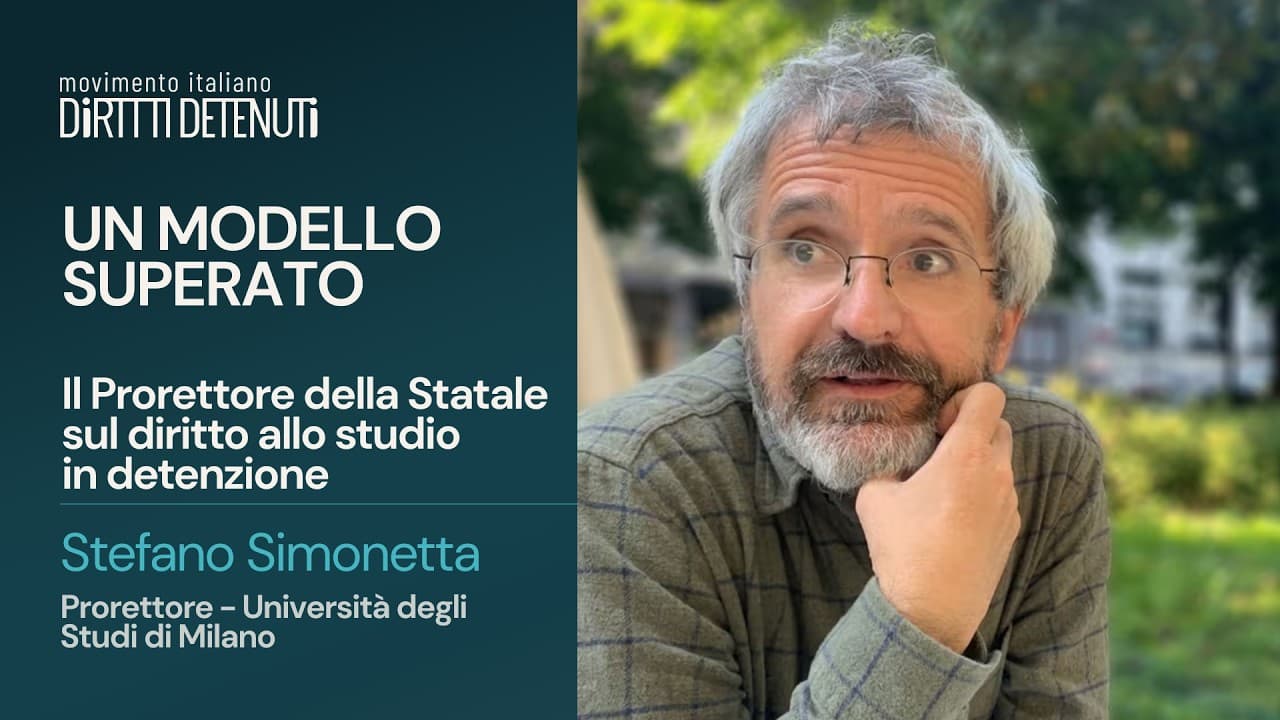
Stefano Simonetta recounts the university project for prisoners, emphasising the importance of studying for reintegration and sociality.
How the project was born that allows detained persons to study at the Statale in conditions as normal as possible: free of charge, in-person courses, real university life.
Prison is an outdated model, prison does not work and it would certainly be desirable for it to be abolished or minimised.
I entered prison for the first time in 2014 for an exam, a very strong sensation. In 2015 I decided to carry out this project of which I am very proud and which has really become for me a sort of new creature.
The idea was to have a project that would allow people who wanted to study at the Statale and found themselves in conditions of external or internal penal execution, to do so in the least complex conditions possible.
And so we thought about making it free of charge – removing every fee and contribution for those enrolling at the Statale, I repeat, in penal execution even external, about bringing the university into prison, about regularly entering with courses so that those who were in prison would have the possibility to meet students, to be in the classroom, to meet lecturers, to somehow experience university life.
The right to study on paper is obviously at
Why the right to study in prison is often denied or only partially guaranteed
The provision is enforceable by all those who are in prison, like all other fundamental rights, except that of personal liberty, and it is an enormous loss, but in reality it is a right often denied or partially denied.
Naturally it depends from prison to prison, from situation to situation. There are extreme situations in which there is no possibility to study in certain prisons, to others where instead there are many opportunities.
To give the suspended time of prison a particular meaning, the desire to do something that one was not able to do before. Many tell us "if I had not ended up in prison I would not have encountered books". To cheat time, assuming that it can be cheated in some way.
Here the motivations are many. What we can say is that many study with a passion, with a determination, with an enthusiasm that sometimes is not found outside. The prisons are not designed, among other things,
Internal stigma: why studying is seen by some as "collaboration" with the State, almost as a weakness.
for people who study and therefore we always have to fight to have adequate spaces and we appear annoying, invasive because we come in with dozens and dozens of students, hundreds every year and this is naturally a hindrance.
And then there is a difficulty that many have told me about and that I would not have imagined and it is a sort of stigma from others, other detained people towards those who study, especially if they study at university, because sometimes it is seen as a sign of giving in. Like a sort of collaboration with the State, not from real people, from real criminals, no, not from real prisoners or even not from real men.
The greatest
The link between education, sociality and reintegration: the right to remain in contact with the civil society to which one will have to return
the challenge of education in prison I believe is to create community. Bringing school, university, study into prison is a way to avoid that process of isolation, separation, alienation that prison tends to produce.
Whereas studying together is one of the things that most creates community, it is an experience that we all live, after all. But the fundamental element of study is sociability. The right to study is also a right to sociability.
It is a way to begin to make those who have been detained meet that so-called civil society from which they have been separated as perpetrators of offences, whether they have been committed or not, but in any case they have been separated and to which they will have to return, because the Constitution says so, not because we hope so.
Prison is an outdated model, prison does not work,
Because every activity that comes in from outside reduces the harm that detention produces.
perhaps it is not amendable and certainly it would be desirable for it to be abolished or minimised to very limited cases.
In the meantime, however, what we can do for prison is everything that is necessary to reduce the harm that prison produces. The harm, prison produces harm, it very often betrays the constitutional, and entering prison for an art workshop, for a philosophy course, for the gym, for boxing, for playing football, for any kind of activity that comes from outside is a way to mitigate the negative effects, precisely, to reduce the harm while waiting for prison to be dispensed with or for it to be dispensed with much more than the excessive use of this instrument which now has no reason to exist, in my view.
What it covers
Laws cited
- Art. 27 Constitution — The punishment must aim at the rehabilitation of the convicted person and cannot consist of treatments contrary to the sense of humanity.
- Art. 34 Constitution — School is open to everyone and education is a right guaranteed also to detained persons.
Keywords
- right to study
- prison
- social reintegration
- sociality
- stigma
- university education
- harm reduction
- Constitution
Who speaks
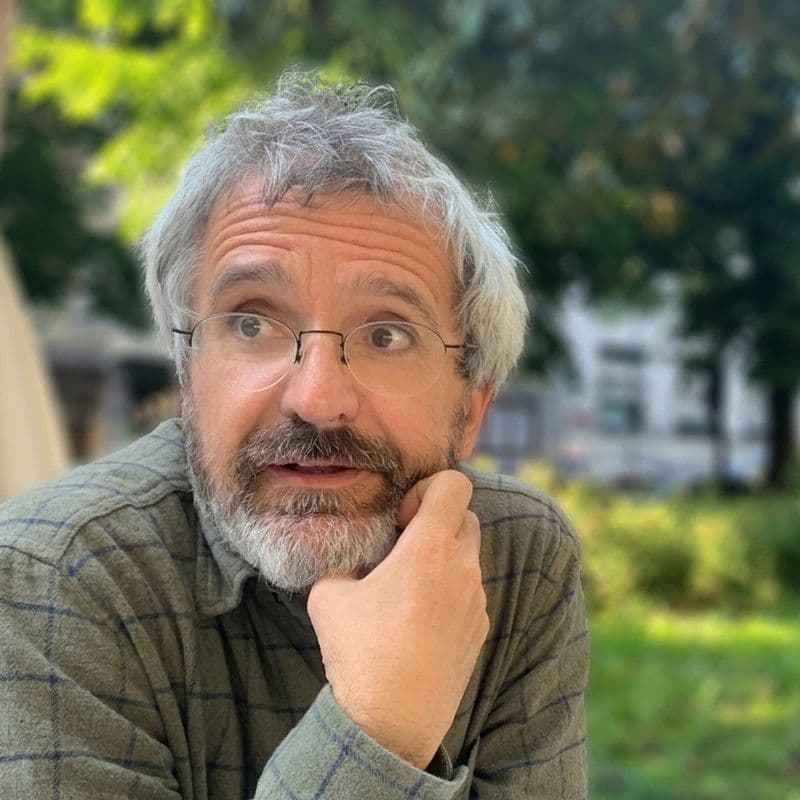
Stefano Simonetta