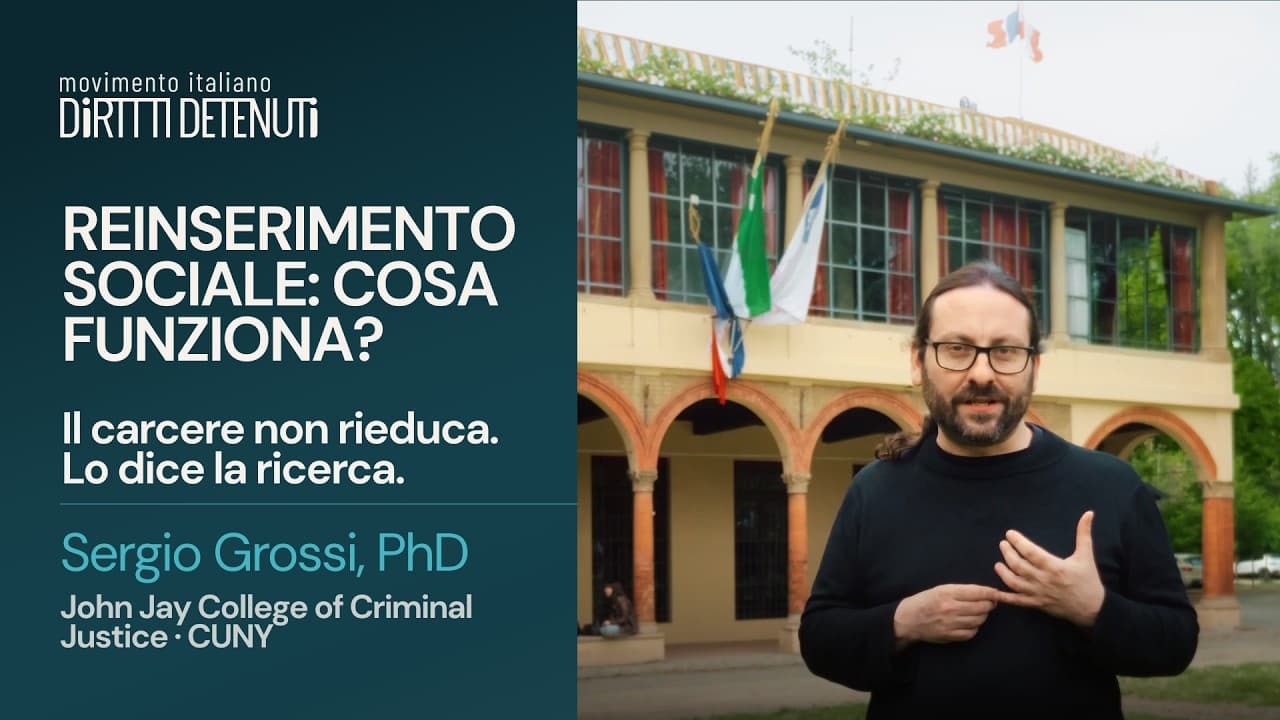
Sergio Grossi explains how punitive prison fails in reintegration and underlines the importance of education to reduce recidivism.
In punitive prison it takes away freedom and dignity
The idea is that all people have the right to a second opportunity, which is often a first opportunity because some people have never even had the first.
I am Sergio Grossi, professor of criminology at John J. College of Criminal Justice City University of New York and I work on education in prison and I have already worked in different countries in the world, in Brazil, in Argentina, in France, Spain, England and also here in Italy.
The common thread of the different prison systems is that in this space there should be an idea of reintegration, but then we find that reintegration fails or is very limited compared to punitivism, compared to prison which deprives not only of liberty but also of dignity.
Often I
The alternative exists, the example of Brazil
I have dealt with various alternatives at a global level. I have studied in depth those that are called police-free prisons in Brazil, where detained people co-manage a prison space and are also then hired to work as social educators when they have finished the penal process.
At the moment there is a very strong movement of universities in prison in the United States and also here in Italy. Education in the prison space is limited.
Education reduces recidivism and makes a society safer.
at the same time from spaces that are often not sufficient, but also from political and individual mental spaces. Many people do not believe in the possibility of reintegration, of education for detained people and other people are influenced by punitivism.
What has been seen in many surveys is that it is explained to people that giving opportunities also creates a safer society because various studies show how education reduces recidivism. People who have the possibility to be included in society largely abandon crime.
So with this idea people understand very clearly why we must invest in education and also for people who are not necessarily interested in improving the rights of detained people, they manage to understand that these programmes are cost effective.
What does cost effective mean? If we invest money in the education of people, then we avoid having to invest in even more police, in even more prisons, more courts and we also reduce the harm that crime can do to victims.
The idea that all people have the right to a second opportunity,
By locking people up, no greater social security is generated.
which is often a first opportunity because some people have never even had the first one and they create a society that is less humane, but is also more insecure, because by locking people up social security is not generated any more.
A story that struck me a lot, when I was working in the prison in Argentina, was that of a very young boy who entered for the theft of a bike and while he was in prison he suffered a collective rape. Three years later he returned to prison and in this case he had raped another person.
This, in my opinion, very much represents the paradigm of prison where a series of social problems are not taken in charge and then are found to be amplified after years. One of the
Society must know what happens inside penitentiary institutions
the most significant issues of education in prison is the education from prison to society.
Society must increasingly know what happens in the prison space, must be aware of who the people inside are and, by knowing them, re-humanises them and breaks the stereotypes and stigmatisation that people in prison suffer.
Therefore, the idea that education must also be social education, education of society is fundamental and very important.
The Italian Prisoners' Rights Movement as a fundamental space for providing information and offering practical tools
The Italian Movement for Prisoners' Rights can absolutely be a fundamental tool to co-construct this dialogue between the external and internal society and also to break this dichotomy, this division.
There is a very large space for action and a decisive political importance. We find that many of the transformations of the prison space are made impossible by a lack of knowledge of what happens inside by people outside, right?
So even the people who try to transform the prison space come up against a public opinion that, not knowing, becomes very punitive and this is a fundamental space of political struggle in contemporary societies.
At the moment in which they carry forward a more just society, they also carry forward a society that has less need of prison, has less need of punishment, that has less need to exclude people who often commit crimes at a time when they too have been victimised by society or have been abandoned by society.
Human rights
Human rights are universal rights and must be guaranteed for everyone
They are universal rights and must be guaranteed for everyone, regardless of whether people have committed an offence or not.
We see that they are not always guaranteed and therefore struggles must in any case be global and must be for all people, including people who have committed a crime.
What it covers
Laws cited
- Art. 27 Constitution — It establishes that criminal responsibility is personal, punishments cannot consist of treatments contrary to the sense of humanity and must aim at the re-education of the convicted person.
- Universal human rights — Principle according to which fundamental rights belong to all persons, including those who have committed offences.
Keywords
- punitive prison
- dignity
- reinstatement
- education in prison
- recidivism
- human rights
- second opportunity
- stigmatisation
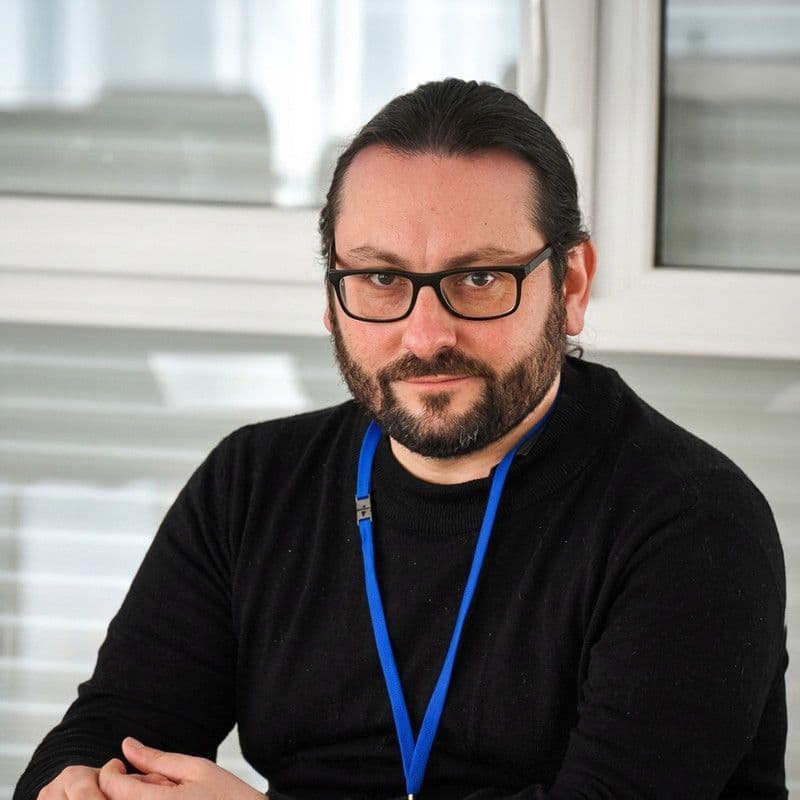
Who speaks
Sergio Grossi