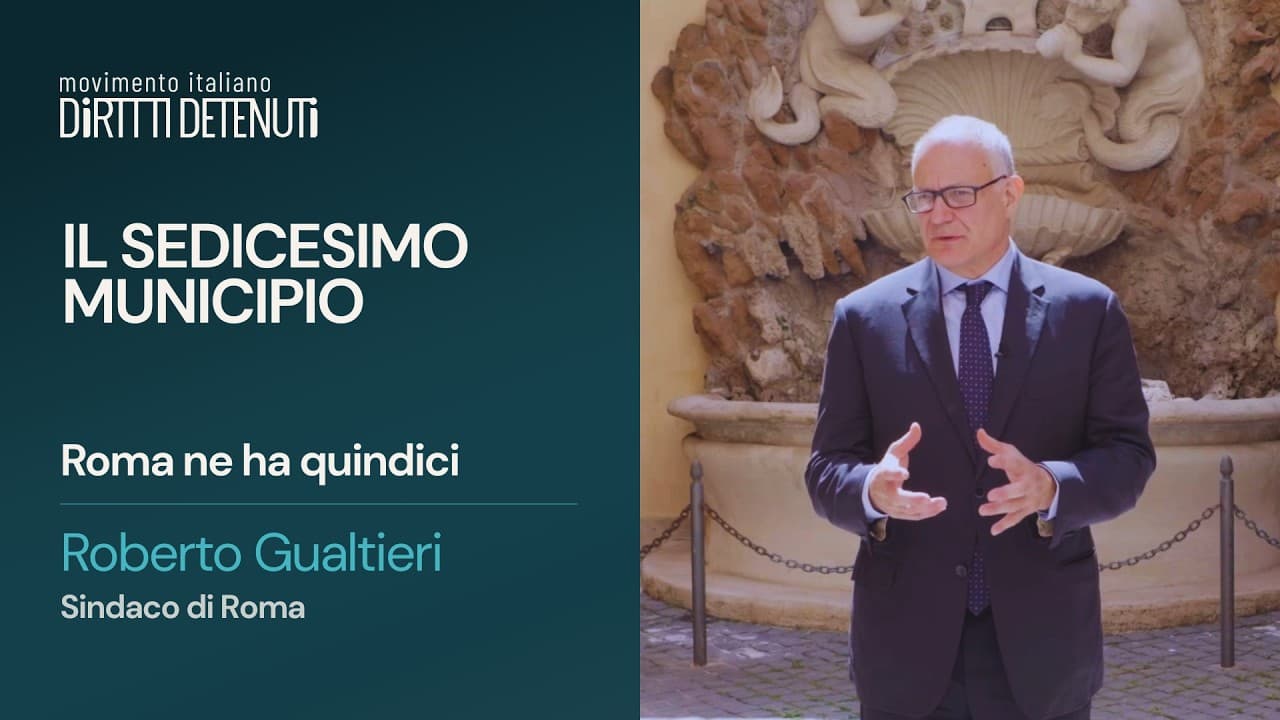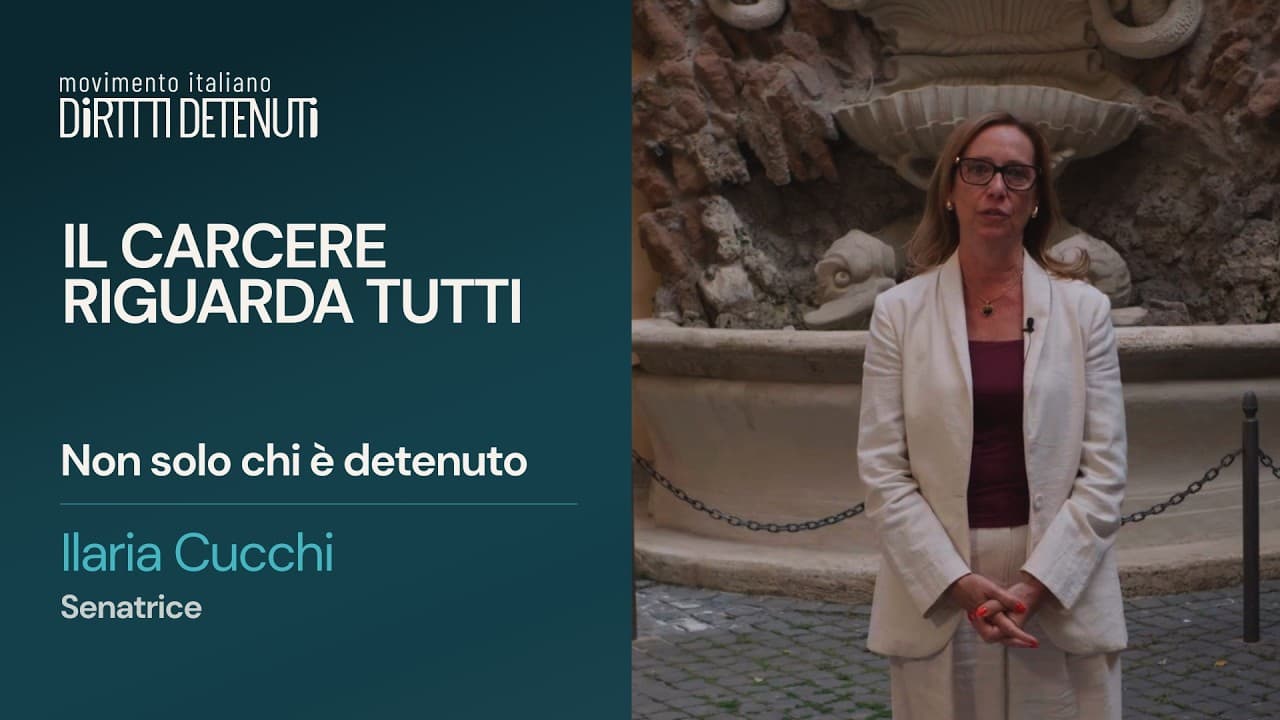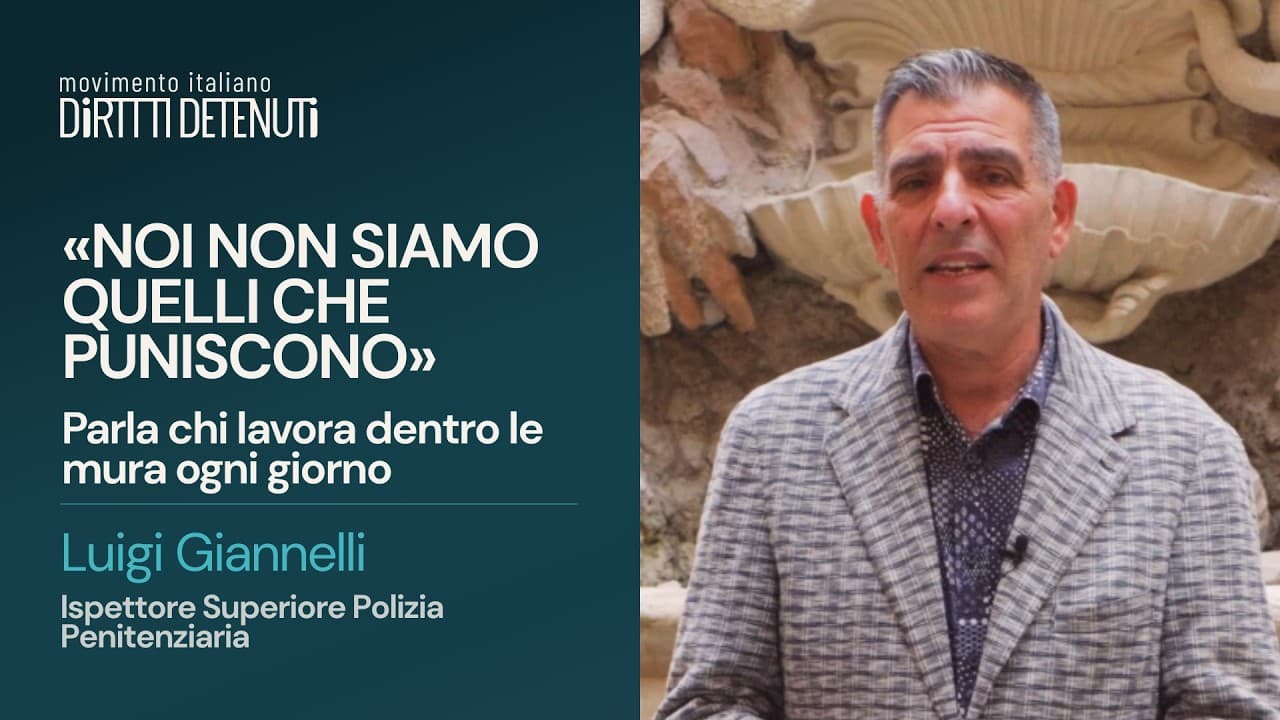
The Italian Prisoners' Rights Movement promotes restorative justice, protects the rights of prisoners and encourages reintegration and information.
The fact that nobody knows: 64,000 people in detention
As of today, there are about 64,000 people who are incarcerated in prison, but only a few truly know what happens inside Italian penitentiaries.
The Movimento Italiano Diritti Detenuti is a non-profit association that has two objectives. The first is to imagine a different type of justice. The second is to try to guarantee the rights of the people who are inside penal institutions.
Rights that are on paper but which are often not guaranteed in reality. Diritti detenuti is a play on words that actually has a double meaning.
What is the Movimento Italiano Diritti Detenuti and what does "diritti detenuti" really mean
Prisoners' rights are the rights of detained persons, but at the same time they are also rights that are detained because they are on paper, but are not truly guaranteed within Italian penitentiaries.
Prison is a cultural construct, it is not a natural construct. For this reason we must begin to discuss it and perhaps even to question it.
As the Italian Prisoners' Rights Movement we want to do this, we want to begin to rethink the prison model, we want to consider proposing a different type of justice, a type of restorative and not retributive justice that does not aim only to punish, but above all to repair the harm that has been done at the level of the community.
And within the situation that already exists, we commit ourselves daily to the protection of the rights of persons deprived and of liberty. As the Italian Prisoners' Rights Movement
The three concrete actions of the Movement: information, digital tools, reintegration
We have three objectives. The first is to bring a more realistic narrative about prison, trying to move away from the usual narrative that does not really look at what happens inside penitentiaries.
The second objective is to promote technological tools that bring people deprived of their liberty, people who have experienced deprivation of liberty, their families, lawyers and all those who revolve around the world of incarceration closer to more direct access to the world of rights, those rights that often speak bureaucratese, speak the language of jurisprudence and therefore seem something distant, inaccessible, only ideal. Through technology we believe we can make them more real, more concrete, at least more democratic.
The last objective we set ourselves is an operational principle, that of promoting educational and work paths that guarantee the reintegration of detained persons within civil society after detention. Because reintegration is not a reward, it is a civil necessity, because more reintegration, more education, more work mean less recidivism and today recidivism in Italy is 70%. This tells us something about prison, that prison as a model has failed. A
Less recidivism means fewer victims. Real security is not the one of slogans.
serious reintegration means more security for civil society and fewer victims.
What it covers
Laws cited
- Art. 27 Constitution — It establishes that criminal responsibility is personal, that the defendant is not considered guilty until the final conviction and that punishments must aim at the rehabilitation of the convicted person.
Keywords
- prison
- prisoners' rights
- restorative justice
- recidivism
- reintegration
- association
- digital tools
- narration

Who speaks
Giulia Troncatti